Most Common Pool Leak Locations in Southwest Florida (and What They Mean)
A practical guide to the most frequent pool leak spots—skimmers, return lines, light niches, spa plumbing and tile lines—what each leak usually signals, and what homeowners in SW Florida should expect when scheduling a professional leak detection visit.

Why this guide matters for Southwest Florida pool owners
If your pool is losing water, spotting where the leak is (or at least knowing the likely locations) helps you avoid repeated repairs and higher water bills. In SW Florida, Sherlock Leak Detection specializes in pool leak finding and repairs using Florida-certified divers and electronic leak-finding equipment, so homeowners can get reliable answers. This article walks through the most common leak points and what each typically indicates, so you know what to expect before a technician arrives.
Skimmers and skimmer throats
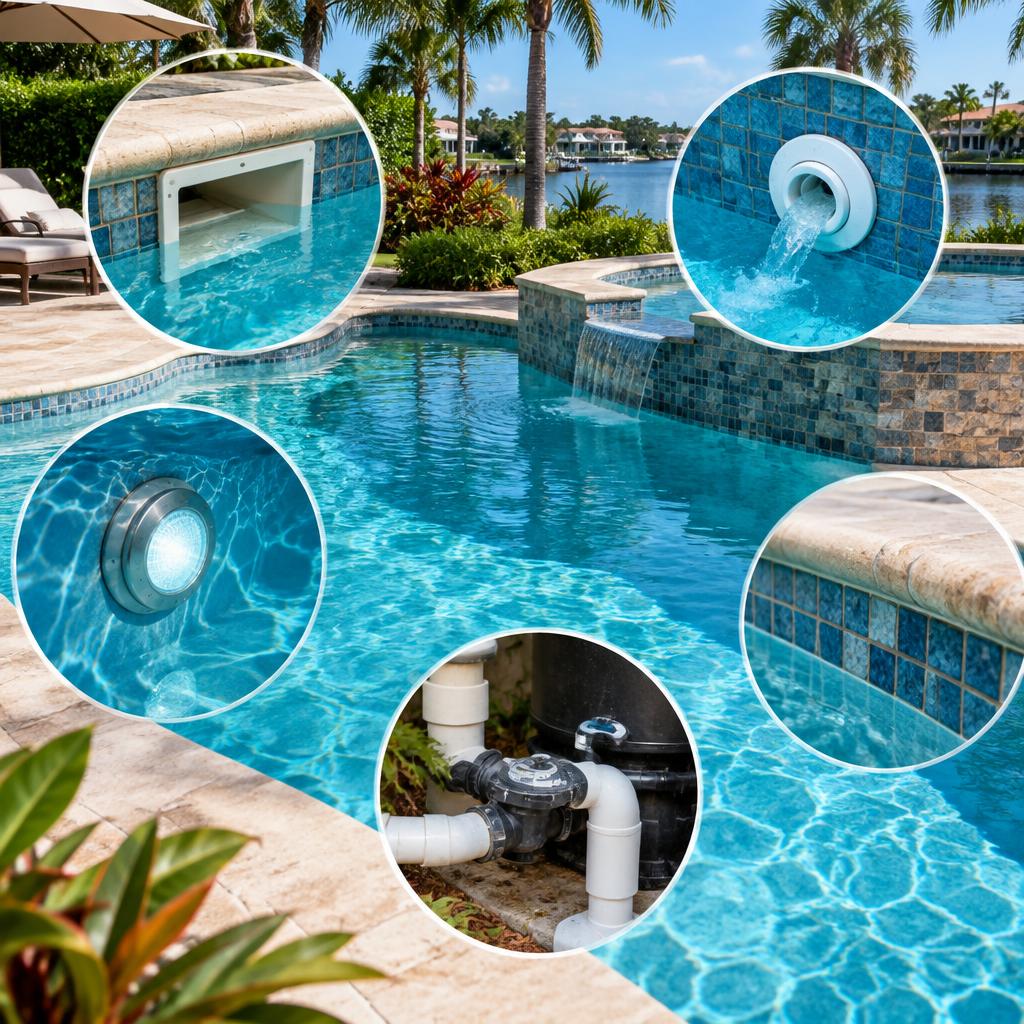
Skimmers are one of the most common trouble spots. Signs include a steady drop in water level that stabilizes just below the skimmer opening, visible cracks around the skimmer face, or the need to keep adding water frequently. A skimmer leak often means a cracked throat or damaged mounting flange where the skimmer joins the shell. Reviews consistently show skimmer repairs are often found and fixed quickly by experienced techs—sometimes after other companies only applied temporary fixes—so ask the detective team to check the throat and surrounding shell if your water loss points to the skimmer.
Return lines and fittings
Leaking return lines or fittings (the pipes that send water back to the pool) usually show up as unexplained water loss without surface cracks, discolored landscaping, or reduced circulation. A leak in a return line can stem from a loose or broken fitting, a cracked pipe, or a joint failure—sometimes under the deck or buried in the yard. Technicians typically use a combination of electronic equipment and underwater inspection to locate these, and customers report return-line issues getting resolved after careful diagnosis rather than guesswork.
Light niches and underwater light fittings
Underwater lights and their housings are another frequent source of leaks. Signs include moisture around the light niche, visible corrosion, or in severe cases equipment falling loose into the pool or spa. One local homeowner described a problem where a stripped screw caused the light to detach; prompt attention prevented further damage. Because lights involve electrical components, these repairs are best handled by professionals with diving experience and the right safety protocols.
Spa plumbing and whirlpool connections
Spas and attached whirlpools have their own plumbing runs, valves and throat areas that can leak. If the spa is losing water faster than the pool, or if you notice wet spots near spa equipment, the issue may be in the spa plumbing, internal fittings, or the transition between spa and pool. In SW Florida properties where pools and spas see heavy use, trained technicians often inspect valves, unions and underwater connections to determine whether a repair can be made in place or requires more involved work.
Tile lines, shell cracks and finish delamination
Leaks along the tile line or just below coping can indicate problems with tile grout, bonding, or small shell cracks. These leaks sometimes present as salt or mineral streaks, algae growth at a particular waterline, or seepage under coping. While cosmetic-looking, these areas should be diagnosed promptly—what appears superficial can signal deeper bonding issues. Sherlock Leak Detection uses electronic methods and diver checks to pinpoint whether the finish, tile bond, or an underlying crack is the culprit before recommending repairs.
What to expect when you call for leak detection
When you schedule a leak detection appointment in Port Charlotte or anywhere in SW Florida, expect clear communication from the office and a technician who explains options before starting. Many customers praise technicians for finding and fixing leaks in a single visit and for walking through the problem and repair choices. Technicians may first run noninvasive electronic tests and, if needed, perform an underwater inspection. The company’s use of certified divers and specialized equipment helps avoid unnecessary excavations. Finally, good providers will advise simple DIY checks you can do beforehand, give a transparent quote for repairs, and recommend the least invasive fix that will solve the problem.
Customer review


Article by
Sherlock Leak Detection
Specializing in SW Florida swimming pool leak detection and repairs, we offer guaranteed solutions for your pool. We will fix any leaks in your pool with the help from Florida certified divers, using electronic leak-finding equipment. We are the area's oldest, most reliable and #1 Rated Family Owned Pool Leak Repair firm serving all of SW Florida